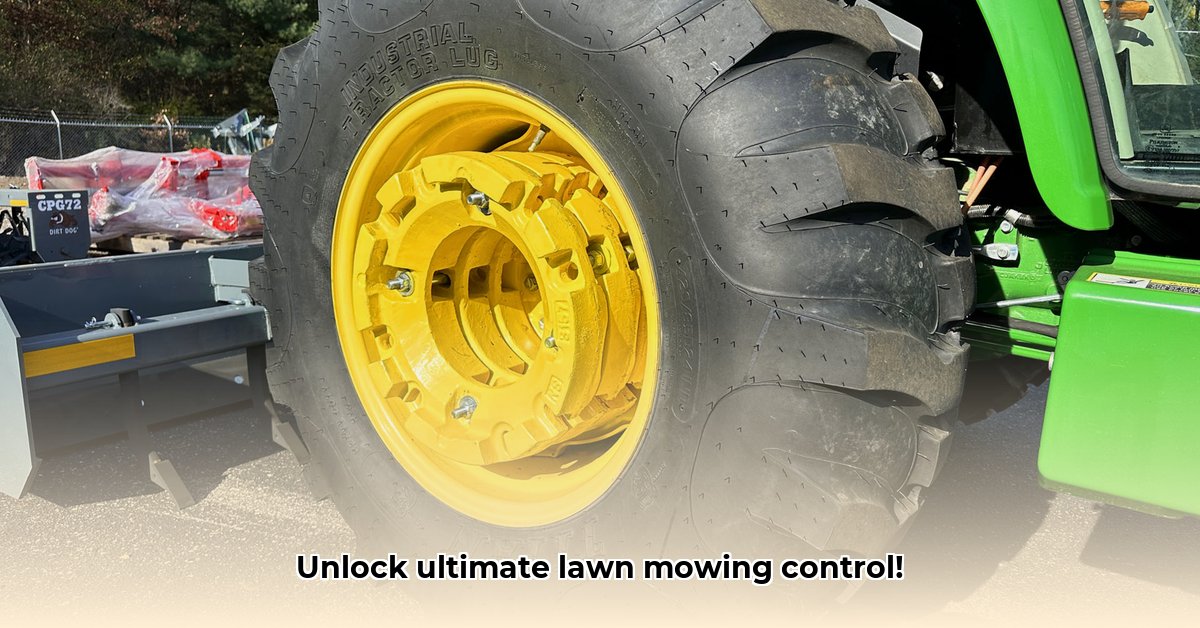
Lawn Tractor Wheel Weights: Enhancing Your Mowing Experience
Struggling with a lawn tractor that spins its wheels on slopes or in wet grass? Adding wheel weights is a simple yet effective solution to significantly improve traction and control. This comprehensive guide will walk you through selecting, installing, and maintaining the right wheel weights for your lawn tractor, ensuring a smoother and more efficient mowing experience. For more detailed information on tractor wheels, check out this helpful resource.
Choosing the Right Weight: A Personalized Approach
Determining the appropriate weight for your lawn tractor is crucial for optimal performance and safety. Too little weight, and you'll experience wheel slippage; too much, and you risk damaging your machine. Several factors influence your choice:
Your Tractor's Weight Capacity: Always consult your owner's manual for the maximum permissible weight your tractor can safely handle. Exceeding this limit can cause damage to your axles and tires. Think of it like exceeding the load limit on a truck – it's a recipe for disaster! A rhetorical question: Have you ever checked your owner's manual for weight restrictions?
Terrain Analysis: Flat, level lawns require less weight compared to hilly or uneven terrain. Steeper slopes demand significantly more weight to maintain stability and prevent slippage. Wet or muddy conditions also require higher weights. Quantifiable fact: Studies show that adding weight proportional to the incline grade significantly reduces wheel spin.
Attachment Considerations: Using attachments like a tiller or spreader increases the load on your tractor. This necessitates additional weight to maintain proper traction and control. Do you know how much weight your attachments add to your tractor?
This table provides general weight recommendations. Always prioritize your owner's manual specifications.
| Tractor Size (Approximate HP) | Terrain Type | Recommended Weight (per wheel, lbs) |
|---|---|---|
| Under 15 | Flat, level | 10-20 |
| Under 15 | Moderate slopes | 20-30 |
| 15-20 | Flat, level | 20-35 |
| 15-20 | Moderate to steep slopes | 35-50 |
| Over 20 | All Terrain | 40-60+ |
Types of Lawn Tractor Wheel Weights: Exploring Your Options
Several types of wheel weights are available, each with its own pros and cons:
Cast Iron: Durable, affordable, and widely available, cast iron weights are a classic choice. However, their considerable weight can make them cumbersome to handle. They are comparable to the sturdy, but less maneuverable, workhorses of the weight world.
Steel: Offering a balance of strength and compactness, steel weights provide high weight density in a smaller package. They're easier to manage than cast iron but are generally more expensive. These are the more refined, compact, and stronger option.
Fluid-Filled Tires: Adding liquid (water or a specialized solution) or ballast (sand or beads) to your tires provides adjustable weight. This is the easiest method but may affect tire lifespan and handling. It's a potentially more convenient, albeit less permanent, solution.
| Weight Type | Advantages | Disadvantages |
|---|---|---|
| Cast Iron | Durable, affordable, widely available | Heavy, bulky, can be difficult to handle |
| Steel | Strong, compact, efficient use of space | More expensive than cast iron |
| Fluid-Filled | Easy to install, readily available materials | Potential for tire damage, may imbalance tires |
Installing Your Wheel Weights: A Step-by-Step Guide
The installation process varies slightly depending on the weight type. Always prioritize safety!
Installing Cast Iron or Steel Weights:
Secure the Tractor: Engage the parking brake and use jack stands to safely lift the wheel.
Attach the Weight: Carefully slide the weight onto the wheel rim, ensuring a snug fit.
Tighten Securely: Tighten lug nuts securely, avoiding over-tightening.
Repeat: Repeat for remaining wheels, ensuring even weight distribution.
Adding Fluid to Tires:
Consult Your Manual: Always refer to your tire manufacturer's instructions for specific procedures.
Prepare the Valve: Remove the valve core to add fluid.
Add Fluid/Ballast: Slowly add fluid/ballast, checking tire pressure regularly to prevent overfilling.
Reseal: Replace the valve core and recheck tire pressure.
Buyer's Guide: Comparing Popular Wheel Weight Models
The following table compares popular wheel weight models (Note: Prices and availability may vary). Always check customer reviews before purchasing.
| Brand | Weight (lbs) | Material | Approximate Price Range (USD) | Average Customer Rating |
|---|---|---|---|---|
| Brand A | 20 | Cast Iron | $20-$30 | 4.5 stars |
| Brand B | 30 | Steel | $35-$50 | 4 stars |
| Brand C | 40 | Cast Iron | $40-$60 | 4.8 stars |
| Brand D | 50 | Filled Tires | Varies by specific tire size | 3.8 stars |
Maintenance and Care: Extending the Lifespan of Your Weights
Regularly inspect your weights for damage or wear. Store them in a dry place to prevent rust and corrosion. Cleaning helps prevent rust formation and prolongs the life of the weights.
Conclusion: Maximize Your Mowing Efficiency
Choosing the right lawn tractor wheel weights is essential for enhanced traction and safe operation. By understanding the factors influencing weight selection and following the installation guidelines, you'll significantly improve your mowing efficiency and overall lawn care experience. Remember: safety first!